
Sink Cracks That Don't Require Replacing Your Entire Countertop
Undermount Sink Replacement in Philadelphia, PA for cracked sinks in quartz or granite vanity tops that homeowners want to preserve
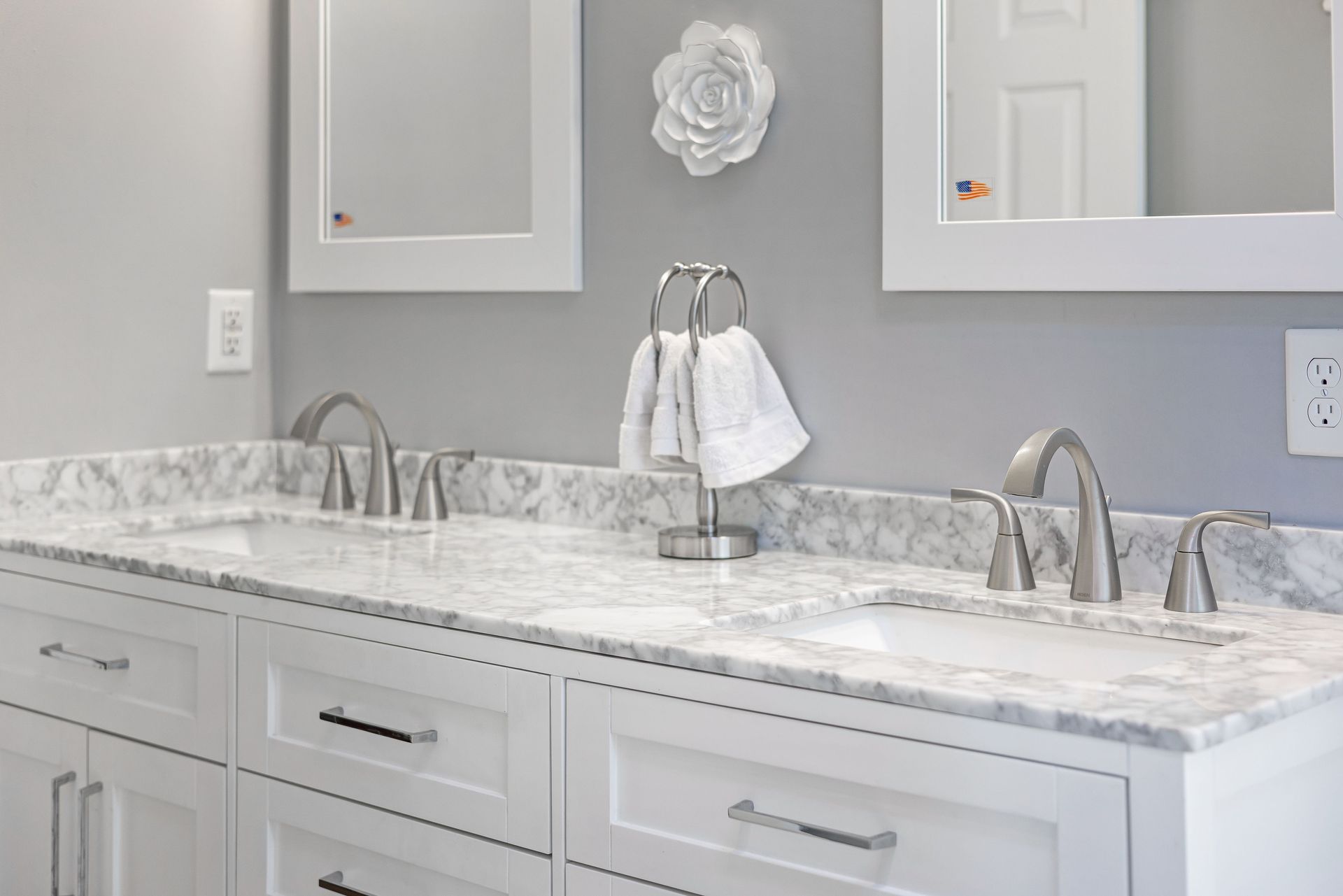
If you have a cracked undermount sink in a quartz or granite countertop, you might assume the entire vanity top needs replacement, but Rare Heating and Air replaces undermount sinks in both kitchen and bathroom installations without disturbing the countertop itself. This matters when you've invested in a high-quality stone surface and the sink develops a crack from impact or thermal stress, which happens frequently in bathroom vanities when heavy objects fall into the basin. The replacement process preserves your existing countertop by carefully releasing the adhesive bond and silicone seal without applying force to the stone.
The work involves disconnecting plumbing, cutting through the silicone and epoxy that bond the sink to the underside of the countertop, supporting the sink as it separates to prevent sudden drops, then cleaning all old adhesive from the stone before positioning and securing the new sink with fresh epoxy rated for stone countertops. Temperature and humidity in Philadelphia, PA affect how long the epoxy requires to cure before plumbing can be reconnected and the sink can handle water weight.
Request a countertop and sink evaluation to determine whether your current sink can be removed without risking the stone and to confirm the replacement sink dimensions match your cutout.
How Undermount Sink Replacement Actually Works
Undermount sinks attach to the underside of stone countertops using a combination of silicone sealant along the rim and two-part epoxy at support points, and the sink's weight hangs entirely from this bond rather than resting on a rim like drop-in models. Removing the old sink without cracking the quartz or granite requires cutting the silicone seal with a thin blade and gently prying the epoxy bond points rather than forcing the sink downward, which concentrates stress at the cutout edge where stone is most vulnerable.
Once the new sink is installed, you'll notice the basin sits flush with the underside of your countertop again, water no longer seeps into the cabinet below through hairline cracks, and the sink supports the weight of standing water without flexing away from the stone. The new silicone seal around the rim prevents moisture from wicking into the particleboard or plywood substrate that supports the countertop, which is what causes cabinet panels to swell and delaminate over time.
The replacement includes removing the old sink, cleaning the bonding surface on the stone, applying new epoxy and silicone, and reconnecting drain assemblies and water supply lines. It does not include replacing or repairing damaged countertops, refinishing cabinet interiors that suffered water damage from the leaking sink, or modifying the countertop cutout if you select a sink with different dimensions than the original.
Answers to Frequent Service Questions
Homeowners with high-end countertops worry about damage during sink removal and whether replacement makes financial sense compared to full countertop replacement.
What causes undermount sinks to crack in the first place?
Cracks typically develop from impact when heavy items drop into the basin, from thermal shock when very hot water contacts a cold porcelain or cast iron sink, or from stress fractures at the drain hole where the sink material is thinnest and mounting hardware concentrates pressure.
How do you remove the old sink without cracking my quartz countertop?
Removal involves cutting the silicone seal around the entire perimeter with a utility knife, then carefully releasing epoxy bond points using a pry tool while supporting the sink's weight from below to prevent it from dropping suddenly and chipping the stone cutout edge.
Can you replace just the sink if mine is glued to granite?
Undermount sink replacement works with both granite and quartz countertops as long as the stone cutout remains intact and the countertop itself shows no cracks radiating from the sink opening, which would indicate structural damage that requires countertop replacement instead.
How long before I can use the sink after installation?
Epoxy cure time determines when the sink can handle water weight, and most two-part epoxies used for stone bonding require 24 hours to reach full strength, though light use for handwashing is typically safe after 12 hours once the initial set completes.
What should I look for when choosing a replacement sink in Philadelphia, PA?
Match the new sink dimensions to your existing cutout unless you're willing to pay for stone cutting to enlarge or reshape the opening, and verify the bowl depth works with your existing plumbing and cabinet space below, especially in bathroom vanities with limited clearance.
Rare Heating and Air sources replacement sinks that match your countertop cutout and installs them using stone-rated epoxy that prevents future separation. Schedule a sink replacement consultation that includes measuring your current cutout and reviewing sink options that fit without requiring countertop modification.
